
People often use the terms interchangeably in everyday conversation, but in any serious quality operation, quality assurance and quality control are distinct and shape how work is organized, who is responsible, and where defects get caught. Confuse the two, and you end up inspecting for problems you could have prevented — or trusting a process you never verified.
This complete guide sets the record straight: what each term really means, how they differ, how they work together in a quality management system, and why both ultimately depend on something most explanations leave out—calibrated instruments and validated processes.
| Quick answer: quality assurance vs quality control
Quality assurance (QA) is proactive and process-focused. It aims to prevent defects by making sure the right processes, procedures, and standards are in place and followed. Quality control (QC) is reactive and product-focused. It aims to detect defects by inspecting, testing, and measuring the actual output against requirements. In short: QA builds quality into the process; QC checks quality in the product. Both sit inside a quality management system and depend on each other. |
Quality Assurance vs Quality Control: Expert Guide
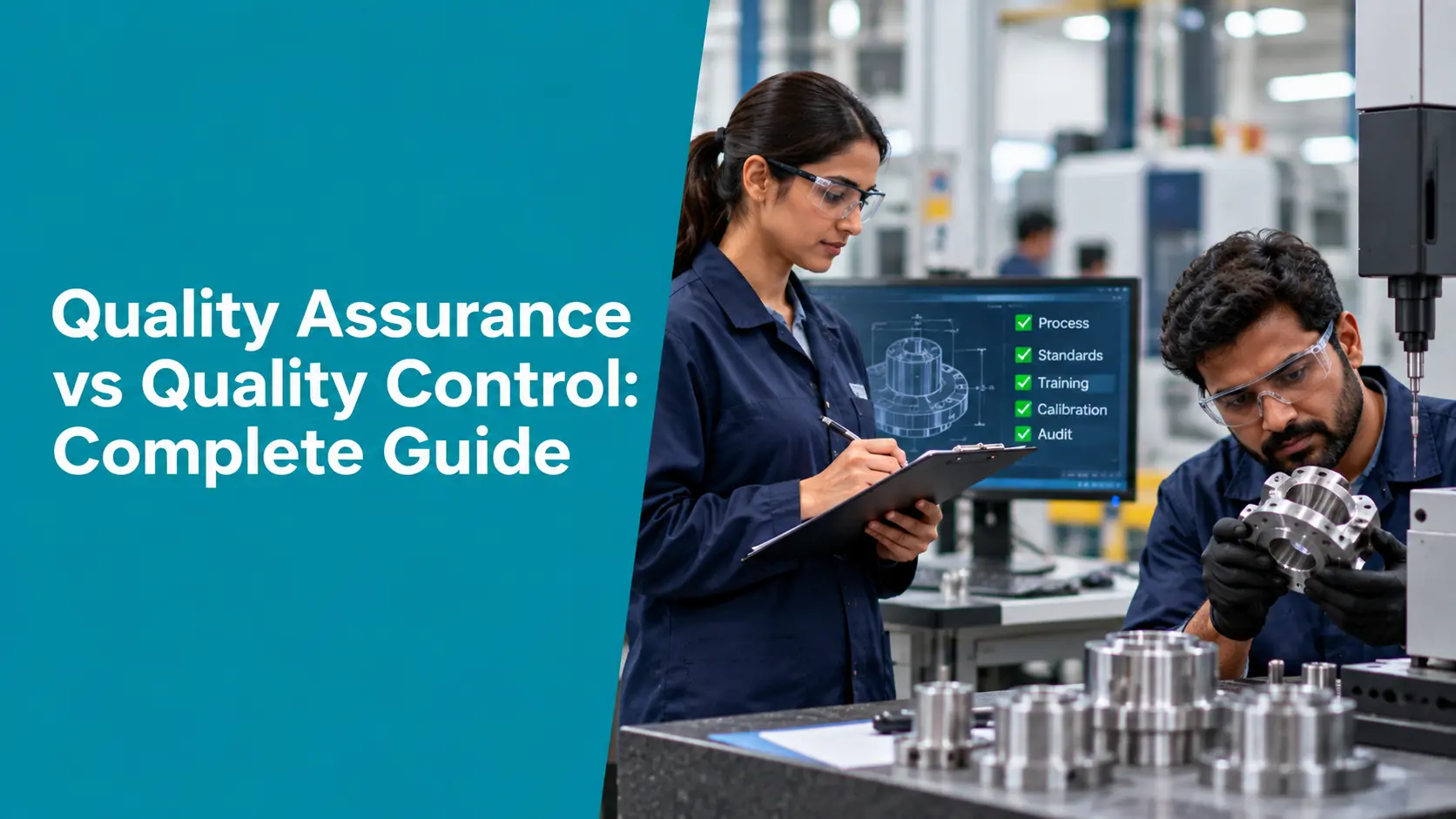
What Is Quality Assurance?
Quality assurance is the set of planned, systematic activities that provide confidence a product or service will meet requirements. It is proactive and process-oriented: rather than checking finished output, QA works on the system that produces it — designing sound procedures, writing and controlling SOPs, training people, auditing processes, validating methods and equipment, and maintaining documentation.
The guiding question of QA is: “Are we doing the right things, the right way?” Because it targets the process, quality assurance aims to prevent defects before they ever occur. In the ISO 9000 vocabulary, it is the part of quality management focused on providing confidence that quality requirements will be fulfilled.
What Is Quality Control?
Quality control is the set of activities that verify the actual output meets requirements. It is reactive and product-oriented: inspection, testing, measurement, and sampling of real units against a defined specification. Where QA shapes the process, QC examines the result — a dimensional check, a lab test, a functional inspection, a statistical sample off the line.
The guiding question of QC is: “Did we get the right result?” Because it targets the product, quality control aims to detect defects so they can be contained before they reach the customer. In ISO 9000 terms, it is the part of quality management focused on fulfilling quality requirements.
Quality Assurance vs Quality Control: Key Differences
| Aspect | Quality Assurance (QA) | Quality Control (QC) |
| Focus | The process | The product/output |
| Approach | Proactive — prevention | Reactive — detection |
| Goal | Prevent defects | Identify and contain defects |
| Key question | Are we doing it the right way? | Did we get the right result? |
| Typical activities | SOPs, audits, training, validation | Inspection, testing, measurement |
| Responsibility | Built in across the whole team | Specific checkpoints and inspectors |
| Timing | Throughout, before and during | During and after production |
| Mindset | Build quality in | Check quality out |
A Simple Example
Imagine a laboratory running a chemical test. Quality assurance writes a validated test method, trains analysts on it, controls the SOP, and makes sure the balance and pipettes are calibrated on schedule—everything that gives confidence the test will produce reliable results. Quality control runs a certified reference material through that test and checks that the result falls within acceptable limits before releasing any real sample data. QA made the process trustworthy; QC verified the output. Remove either and quality collapses.
How QA and QC Work Together
Quality assurance and quality control are not rivals — they are two halves of the same system. QA reduces the number of defects QC has to catch; QC feeds real-world failures back so QA can improve the process. A plant with strong QC but weak QA fights the same fires forever, because nothing fixes the root cause. A plant with strong QA but no QC is flying blind, trusting a process it never verifies against reality. Mature organizations invest in both, and connect them: every QC failure becomes a QA input.
Where They Fit: QMS, ISO 9001, and TQM
Both QA and QC are components of a broader quality management system (QMS). A QMS is the overall framework of policies, processes, and records that runs quality across an organization; QA and QC are specific functions within it. ISO 9001 sets the requirements for that management system, while Total Quality Management (TQM) is the wider, organization-wide culture of continuous improvement that surrounds both. Understanding the hierarchy prevents the common mistake of treating QA, QC, and QMS as interchangeable — they are nested, not equivalent.
Common Misconceptions
- “QA and QC are the same thing”: QA and QC are different functions with different aims — prevention versus detection — even when the same team performs both.
- “Quality is just inspection”: Inspection is only the QC half. Without QA to build a capable process, you inspect the same defects forever.
- “QMS equals QA plus QC”: QA and QC are parts of a QMS, not the whole of it; the QMS also covers management review, improvement, and records.
The Foundation Both Depend On: Measurement and Validation
Here is what most quality assurance vs. quality control explanations miss. Every QC decision rests on a measurement — and a measurement is only trustworthy if the instrument that produced it is calibrated and traceable. An out-of-calibration gauge will pass bad product or reject good product with equal confidence, quietly corrupting every QC result. Likewise, QA is only real when its processes are validated, and its records are audit-ready; an SOP nobody follows, and a method nobody validated provide no assurance at all. Calibration and validation are the foundation beneath both QA and QC — which is exactly where the right software makes the difference.
Compliance and Standards Context
|
Reference |
What it governs |
| ISO 9000 / ISO 9001 | Defines quality management vocabulary (including QA and QC) and the requirements for a quality management system. |
| ISO/IEC 17025 | Competence of testing and calibration laboratories — the backbone of trustworthy QC measurement. |
| 21 CFR Part 11 / EU GMP | For regulated industries: electronic records, signatures, and process controls behind QA and QC. |
| ALCOA+ | Data-integrity principles ensuring QA and QC records are attributable, contemporaneous, accurate, and enduring. |
How Zeptac Helps
Zeptac is a SaaS platform for the Testing, Inspection, Calibration, Certification, and Validation industry, built around the foundation that both QA and QC stand on:
- Trustworthy QC measurement: CalTac keeps every measuring instrument behind your QC decisions calibrated, in-date, and traceable to ISO/IEC 17025 and NABL.
- Real QA through validation: ValTac manages validation of methods, processes, and systems, so your QA activities produce genuine assurance, not paperwork.
- Lab quality control: TestTac runs testing-laboratory workflows with the records and controls that QC and audits demand.
- Audit-ready compliance: records across all three are maintained to 21 CFR Part 11 and ALCOA+ standards, so QA and QC evidence stands up to any audit.
The result is a quality system where QA and QC are not just defined correctly, but backed by defensible data.
Conclusion
The quality assurance vs quality control distinction comes down to a single idea: QA is proactive and works on the process to prevent defects, while QC is reactive and works on the product to detect them. Neither replaces the other, and both live inside a wider quality management system. Get the roles clear, connect them so every QC failure improves the QA process, and — most importantly — build both on the calibrated instruments and validated processes that make quality measurable in the first place. That is when a quality program stops reacting and starts assuring.
| Build QA and QC on a foundation you can defend
Looking to digitize your calibration, testing, or validation processes? Zeptac’s CalTac, TestTac, and ValTac platforms give your quality assurance and quality control the traceable, audit-ready foundation they depend on. Contact our team today to schedule a free demo. |
Frequently Asked Questions for Quality Assurance vs Quality Control
Q1. What is the main difference between quality assurance and quality control?
Answer: Quality assurance is proactive and process-focused — it prevents defects by ensuring the right processes and procedures are in place. Quality control is reactive and product-focused — it detects defects by inspecting and testing the actual output. In short, QA builds quality into the process; QC checks quality in the product.
Q2. Is QA proactive or reactive?
Answer: QA is proactive: it works on the process before and during production to prevent problems. QC is reactive: it works on the finished or in-process output to catch problems that have already occurred.
Q3. Do you need both QA and QC?
Answer: Yes. QC without QA means fighting the same defects forever because you never fix the root cause. QA without QC means trusting a process you never verify against real output. Effective quality programs use both and connect them.
Q4. Is calibration part of QA or QC?
Answer: Calibration is a quality assurance activity — it assures the measurement process is capable and traceable. But it directly underpins quality control, because QC inspection and test results are only valid if the instruments used are calibrated. It bridges the two.
Q5. Are QA and QC the same as a QMS?
Answer: No. QA and QC are functions within a quality management system (QMS). The QMS is the wider framework of policies, processes, and records; ISO 9001 defines its requirements, and Total Quality Management is the broader improvement culture around it.
Q6. Which comes first, QA or QC?
Answer: QA comes first in sequence because it designs and controls the process before production. QC follows, verifying the output that process produces. In practice, they operate continuously and feed each other rather than running strictly one after the other.
Q7. What are examples of QA and QC in a laboratory?
Answer: QA examples: validating a test method, controlling SOPs, training analysts, and scheduling instrument calibration. QC examples: running a reference standard through a test, checking a result against acceptance limits, and inspecting a sample before releasing data.